Japanese troops set foot on Singapore 8 Feb 1942, 10:30pm
Concealed by darkness, Japanese soldiers crossed the Johor Strait towards Singapore on collapsible boats with gunnery.
The invasion of Japanese troops into Singapore was swift and merciless as they far outnumbered and outflanked the Australian troops. In just two hours, the Japanese successfully acquired yet another territory.
The allied forces were expecting the Japanese to infiltrate Singapore anytime. As such, they began attempting to fortify the perimeters of the island.
The Allied forces had around 85,000 men to work with, of which about 70,000 were armed. Their pockets also included 38 infantry battalions, artillery regiments, anti-tank regiments and anti-aircraft guns.
But don’t be fooled by the impressive numbers, as many of the soldiers were made of inexperienced new recruits. Weapons and ammunition were also depleting at rocket speed.
The overall commander of the Allied troops was Lieutenant General Arthur E. Percival. His defence strategy entailed segmenting the island into four sectors: northern, western, southern and reserve, with troops assigned to the coastline of each sector. As much as possible, they were trying to avoid the Japanese landing on the island itself.
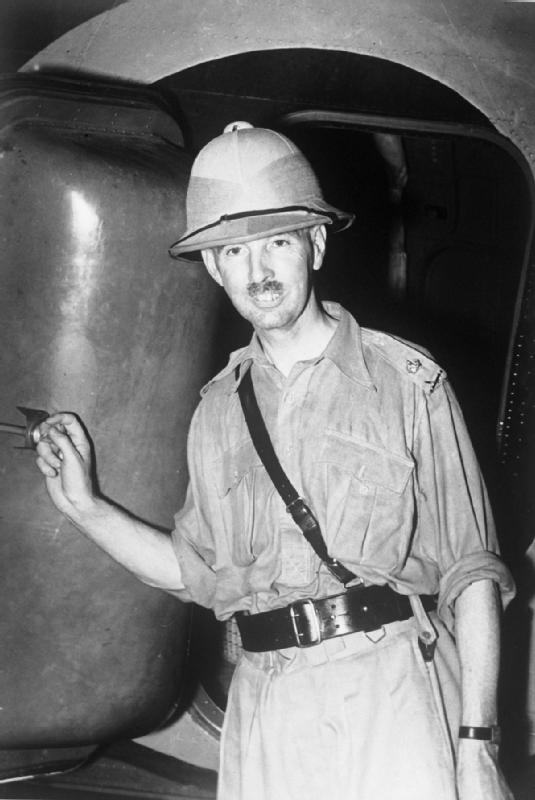
The last allied troops were also redeployed from Malaya into Singapore following the invasion of Malaya.
And on 31 January 1942, a week before the eventual invasion, in an attempt to impede the Japanese advance into Singapore, British troops had set off two explosions on the Causeway. The first had damaged the lock’s lift-bridge, while the second created a 21.33-metre gap in the Causeway.
War hero, Mr Lim Bo Seng, also played a role in this.
Read about Mr Lim Bo Seng’s story herePercival’s stance was that the Japanese would make their entry at the eastern side of Singapore, specifically at the east of the causeway, where the naval base was located. So, they deployed their strongest and largest forces there.
Meanwhile, the northwestern side was handed to the Australian 22nd Brigade. They stationed along the Northwestern coastline at Sarimbun Beach thinly, surrounded by mangroves.
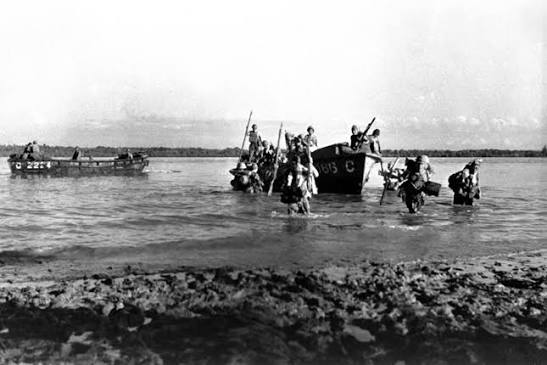
And before they knew it, on 8 February 1942, the 5th and 18th divisions of the Japanese army began shelling the area with heavy gunnery.
Soon enough, the Japanese successfully crossed the Johor Strait in small collapsible assault boats and landed at Sarimbun Beach, easily overwhelming and defeating the Australian troops stationed there.
It was an intense yet quick fight, spanning only two hours, as the Australians were no match for the numerically advantaged Japanese. A whopping 13,000 troops were estimated to have crossed into Singapore that night.
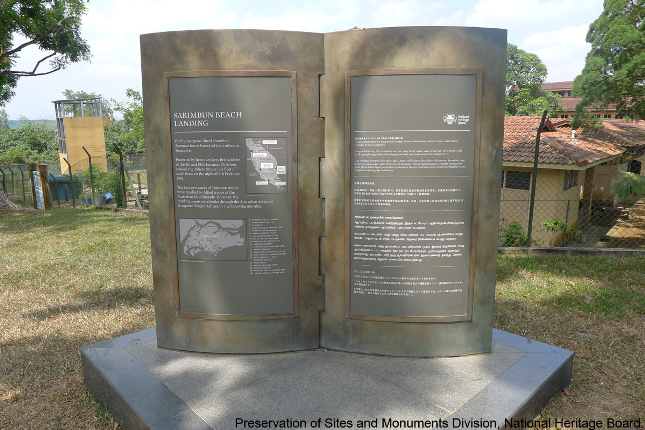
Japanese troops had invaded Singapore, equipped with artillery, using boats. After their win, the Japanese quickly got to repairing the causeway for the Imperial Guards to enter Singapore at Kranji.
Now we know Percival had lost the mind game with the Japanese. The Japanese were well aware of the British’s focus on the sea, so Japan ensured to invade from its back door, Malaya.
This was the Japanese commander’s actual plan: entry into Singapore through the northwestern coastline by the 5th and 18th divisions, with the aim of acquiring Tengah airfield and Bukit Panjang village first. Only after then, will the Imperial Guards division attack the Causeway sector to take Mandai village and Nee Soon.
This marked the start of war in Singapore, a moment that felt almost manifested with everyone having spent so long bracing for.