Lieutenant Adnan Saidi: The Japanese’s Nightmare
14 August 1915 – 14 February 1942
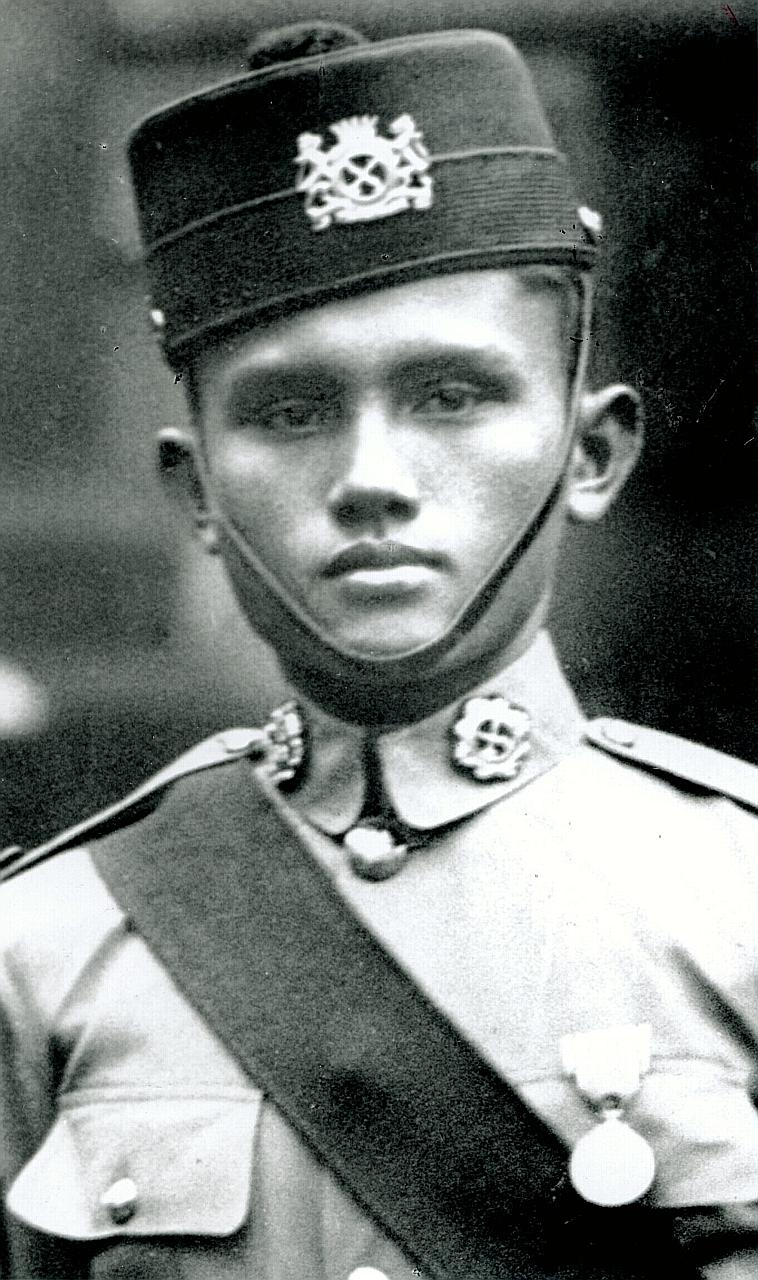
“Biar putih tulang, jangan putih mata” – death before dishonour - this was the saying that rooted war hero, Lieutenant Adnan Saidi, in his service in defending our nation, even though it meant with his own blood and livelihood. A disciplined military soldier and ex-teacher, he was remembered as fierce and full of conviction.
The eldest of six children, Adnan Saidi was born in 1915 in Selangor.
Shortly after his graduation, in 1933, he took a leap of faith and made the choice to quit his teaching career and join the Malay Regiment, an all-Malay military force set up by the British in Malaya. His strong character and skillset quickly set him apart from others as a highly dedicated and disciplined soldier. Chosen as best recruit after one year, it was unsurprising he rose to the rank of sergeant in another two years. Basically the guy in your platoon everyone bets on for Officer Cadet School (OCS). At home, he had a loving family of his wife and three children. His sons’ short-lived memories of their father were filled with rugged games, to train them to grow into tough men. Serious and fierce, yet a good heart.
However, just when his career and personal life were at its peak, the Japanese had made their way to infiltrate Malaya.
He immediately sent his then-pregnant wife and two sons back to their hometown for their safety, at Tanjong Pagar train station. His parting goodbye to his sons was to simply take care of themselves and behave. Spoiler: A final goodbye hidden behind such a fleeting moment, because this would be the last few words ever being exchanged between them.
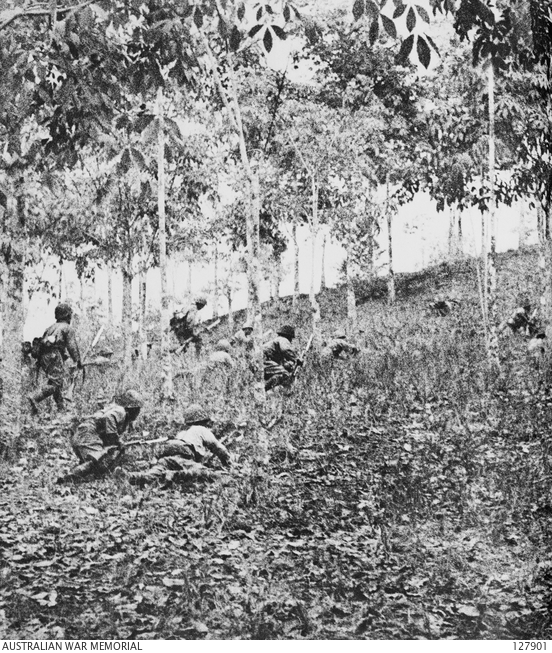
Tasked to defend the Pasir Panjang Ridge, which was a vital border of security as it contained vital ammunition stores and British military infrastructure, Adnan and the Malay Regiment won the Japanese 18th Division’s initial attack on 13 February 1942 by a very thin margin. Badly outnumbered and outflanked, they suffered a significant amount of losses despite successfully resisting Japanese attacks.
At midnight, the men of Company C of the 1st Malay Regiment—a unit in the Malay Regiment led by Adnan—evacuated and relocated on the ridge above Opium factory.
A mere few hours later in the early afternoon on 14 February, some Japanese troops had put on the disguise of Punjabi soldiers from the British Indian Army using turbans. They attempted to unassumingly march onto the hill, however, their plan backfired as Adnan and 2nd Lieutenant Abbas bin Abdul Manan quickly grew suspicious.
1. The Japanese had mistakenly marched in formations of four instead of three, the latter being a standard practice in the British Military.
2. They were marching from an area unlikely to be occupied by Punjabi soldiers.
Affirmed by these red flags and coupled with sharp foresight and swift decisiveness, C Company quickly opened fire, taking out 22 enemy soldiers and forcing the rest to retreat. Good for the Japanese because this cultural appropriation for bloodshed would have gotten them cancelled in 2026 before they could have even tried to attack. But unconceited by their win, after the fight, Adnan said to a fellow soldier, “Mr. Abbas, if I should die today, I am quite willing as long as someone can look after my family.” A family man on the forefront of a war—stoic towards the concept of death and only tethered towards his family. Even with a war to fight, he still does better than some of the jobless fathers out there.
However, this win was short-lived and with luck barely giving any time to the poor dude to recuperate, two hours later, the Japanese returned with vengeance and a deeper greed to win. Annoying mosquitos that just won’t die. In far greater numbers and with heavier firepower, thousands of soldiers poured into the area. To picture thousands, think: for every Malay Soldier, there are 100 Japanese.
To exacerbate C Company’s already intense and precarious state, they were also deprived of any reinforcements as Company B was isolated from an earlier Japanese breakthrough at Buona Vista, while Company D was separated by burning oil that was flowing from an oil depot.
Since luck wasn’t on their side, they could now only depend on sheer determination and physical prowess. During the battle, Lieutenant Adnan continued shouting for his men to fight to the death. He personally manned a whole machine gun until his arm was broken by gunfire, and fired his pistol into the enemy ranks. And at this point if you have no way out, why not give ’em your all. So, when their bullets ran out, they charged at the enemy, fighting on with only their bayonets, knives, and their bare hands. 10 Buckys vs a hundred Scarlet Witches. Yeah, surprise! The Japanese once again cruelly annihilated the unit. Maybe blood and corpses are their source of protein?
By now, if they weren’t dead, they would have been personally massacred by the Japanese. And one of those belonging to the latter, was Adnan. Though already gruesomely wounded, the Japanese recognised him as the short berserker who had personally killed dozens of Japanese amongst the bodies of motionless Malays who were ripped off their dignities on the battleground. For the Japanese, since mass killing a whole unit isn’t enough for them to sleep soundly at night, they decided to personally hand pick Adnan, beat him repeatedly, hang him upside-down from a cherry tree branch in a gunny sack like an ornament on a christmas tree, and then slowly killed him with long torturous bayonet thrusts. Bro.. this ain’t a birthday party, no candies boutta drop out of the sack buddy. Revenge didn’t end here, because thereafter, the Japanese still forbade work parties from taking his body down for burial.
And maybe the Japanese had a killing KPI to hit because modern day sales KPI definitely had to come from somewhere, or Adnan was just too memorable for the Japanese, because they weren’t done. They proceeded to specially hunt down and try to execute Adnan’s family. Now that’s hardcore - when you’re so fucking badass and you whip your enemies’ balls so hard that your death isn’t even enough to satisfy their thirst for vengeance. Luckily, the Japanese gendarmes never found Adnan’s relatives, and in the end the Lieutenant got the last fuck you badass of the week because thankfully, they were never caught.
After the war, the British awarded Adnan posthumous awards. In Singapore, Adnan and his men are remembered at a museum called Reflections at Bukit Chandu which opened in 2002.